
Trauma-Informed Care at BryLin Hospital Strengthens Patient and Staff Well-Being
Trauma-Informed Care at BryLin Hospital plays a vital role in how we support patients, families, and our clinical teams. Because trauma can shape behavior, communication, and engagement in treatment, our staff integrates trauma-informed principles into daily care. As a result, we create safer, more supportive environments that promote healing while strengthening staff resilience.
Most importantly, this approach reflects our ongoing partnership with the University at Buffalo and its leadership in trauma-informed systems. Through collaboration and advanced training, BryLin continues to strengthen care across our inpatient programs and ambulatory services.
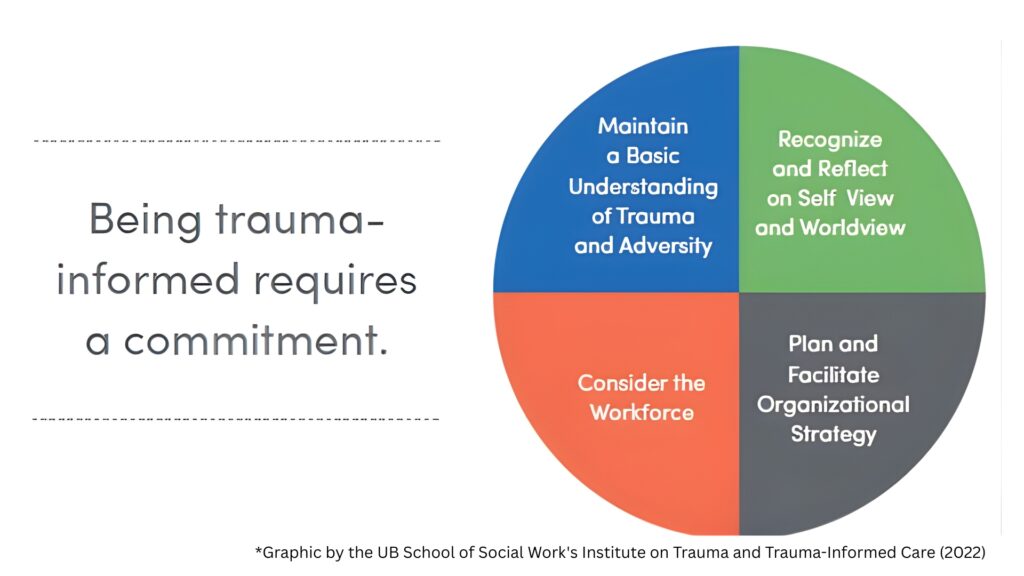
Understanding the Impact of Trauma
Trauma affects how individuals respond to stress, authority, and uncertainty. Therefore, clinicians must look beyond surface behaviors. When someone appears resistant or withdrawn, trauma may influence that response. Because we recognize this reality, Trauma-Informed Care at BryLin Hospital focuses on understanding rather than reacting.
Instead of asking “What’s wrong?”, our teams ask “What happened?” This shift matters. It builds trust, reduces conflict, and increases engagement in treatment. As a result, patients feel safer and more understood during vulnerable moments.
Strengthening Care Through Partnership
BryLin’s work aligns with trauma-informed principles advanced by leaders in the field, including the Institute on Trauma and Trauma-Informed Care at the University at Buffalo. Because research continues to evolve, ongoing training ensures our teams apply best practices consistently.
Through structured education and clinical reinforcement, staff learn how trauma impacts brain development, emotional regulation, and communication patterns. Consequently, teams respond with greater confidence in challenging clinical situations. Most importantly, this training supports both patient healing and staff well-being.
Benefits for Patients and Families
Trauma-Informed Care at BryLin Hospital directly benefits those we serve. Patients experience care that prioritizes safety, choice, and collaboration. Therefore, they often engage more fully in treatment planning and recovery goals.
Families also benefit. Because trauma-informed communication reduces blame and defensiveness, conversations become more productive. As a result, families feel heard, respected, and included in care decisions. This transparency strengthens trust during difficult times.
Reducing Burnout and Supporting Staff
Behavioral health care can be demanding. However, trauma-informed frameworks provide structure and clarity. When staff understand the roots of challenging behavior, they feel more prepared and less overwhelmed. Therefore, team communication improves.
Additionally, shared language around trauma promotes collaboration. Nurses, physicians, social workers, and support staff align around consistent principles. As a result, the workplace culture becomes more supportive and cohesive.
Most importantly, this approach reduces secondary traumatic stress. Because staff receive tools to process and manage exposure to trauma, resilience increases. In turn, this supports retention and professional growth.
Advancing High-Quality Mental Health Care
At BryLin Hospital, trauma-informed principles guide how we deliver inpatient psychiatric stabilization and specialized services such as our Center of Excellence for Electroconvulsive Therapy (ECT). Because every patient’s story matters, we remain committed to compassionate, evidence-based care.
Trauma-Informed Care at BryLin Hospital strengthens safety, improves communication, and enhances clinical outcomes. Therefore, it remains an essential component of high-quality mental health treatment.
As mental health needs continue to grow, partnerships, education, and system-wide commitment will remain critical. Most importantly, we will continue investing in practices that support both healing and the professionals who make that healing possible.
Comments are closed