
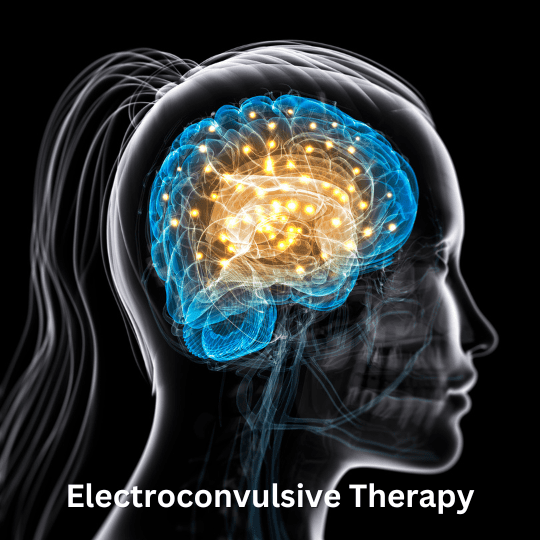
What You Need to Know About Electroconvulsive Therapy (ECT)
Electroconvulsive Therapy (ECT) is one of the most effective treatments available for severe depression and other serious mental health conditions. Despite its proven success and lifesaving potential, ECT has long been misunderstood due to outdated portrayals in popular culture.
Much of the stigma surrounding ECT stems from depictions in films such as One Flew Over the Cuckoo’s Nest and The Snake Pit, which portrayed treatments performed without modern safety measures. Today’s ECT bears little resemblance to those dramatized portrayals. Modern ECT is performed in a highly controlled medical setting under general anesthesia and with muscle relaxants, ensuring patient comfort and safety while maximizing therapeutic benefit.
ECT is endorsed by the American Psychiatric Association and is administered to approximately 100,000 patients each year in the United States. In recent years, ECT has gained broader recognition as a safe, effective, and evidence-based treatment option for individuals experiencing severe depression, treatment-resistant depression, bipolar disorder, catatonia, psychosis, and other serious psychiatric conditions.
A Recognized and Trusted Treatment
ECT’s effectiveness in treating severe mental illness is recognized by leading medical and psychiatric organizations, including the American Psychiatric Association, the American Medical Association, and the National Institute of Mental Health, as well as similar professional organizations in Canada, Great Britain, and many other countries around the world.
For individuals facing severe depression or other debilitating psychiatric conditions, ECT can provide rapid symptom relief, restore functioning, and, in some cases, be lifesaving.
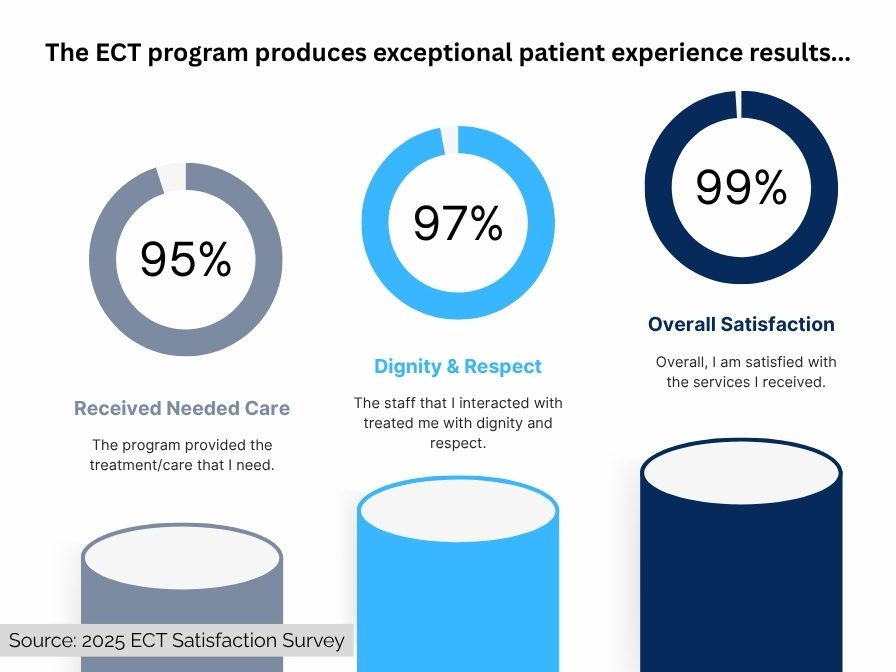
Frequently Asked Questions About Electroconvulsive Therapy (ECT)
What Is Electroconvulsive Therapy (ECT)?
Electroconvulsive Therapy (ECT) is a safe, evidence-based medical treatment used to treat severe mental health conditions, including major depression, treatment-resistant depression, bipolar disorder, catatonia, and certain forms of psychosis. For many individuals, ECT can provide rapid symptom relief when medications, psychotherapy, or other treatment approaches have not been successful.
During treatment, the patient is placed under brief general anesthesia and receives muscle relaxants and oxygen to ensure comfort and safety. A carefully controlled electrical stimulus is then delivered to the scalp, producing a short therapeutic seizure in the brain. This process triggers changes in brain chemistry and neural activity that can help restore healthy brain functioning and significantly reduce psychiatric symptoms.
Is ECT Right for You?
ECT is often recommended for individuals experiencing severe depression, treatment-resistant depression, bipolar disorder, catatonia, psychosis, or other serious psychiatric conditions that have not responded adequately to other forms of treatment.
If you are struggling with symptoms that have not improved with medication, therapy, or other interventions, speak with your psychiatrist or psychiatric mental health nurse practitioner about whether ECT may be an appropriate treatment option. If you and your provider determine that ECT could be beneficial, your provider can contact BryLin Hospital’s ECT Program to begin the evaluation and referral process.
Is ECT Effective?
ECT is among the most effective treatments available for severe depression and certain other psychiatric disorders. Research has shown remission rates ranging from 70% to 90% among appropriately selected patients with severe or treatment-resistant depression.
Many individuals experience significant improvement in symptoms after a course of ECT, often when medications and psychotherapy have not provided adequate relief. While ECT can produce dramatic improvements, ongoing treatment, medication management, therapy, or maintenance ECT may be recommended to help prevent relapse and maintain recovery.
How Is ECT Administered?
ECT is administered by a multidisciplinary treatment team that may include psychiatrists, anesthesiologists, nurses, and other specially trained healthcare professionals.
Most patients receive ECT treatments two or three times per week, typically on Monday, Wednesday, and Friday mornings. A standard course of treatment generally consists of 6 to 12 treatments, although some individuals may require additional treatments to achieve the greatest benefit. Treatment plans are individualized based on each patient’s condition, response to treatment, and overall clinical needs.
How Safe Is ECT?
ECT is considered a safe medical procedure when performed by trained professionals in an appropriate medical setting. Advances in anesthesia, monitoring technology, and treatment techniques have significantly improved the safety and comfort of ECT over the past several decades.
Most patients tolerate ECT well and are able to return home the same day following outpatient treatment. Individuals with certain medical conditions, including cardiovascular concerns, can often safely receive ECT following appropriate medical evaluation and monitoring.
What Are the Most Common Side Effects of ECT?
Immediately following treatment, some patients experience temporary confusion, grogginess, headache, muscle soreness, or nausea. These effects are generally mild and resolve within a few hours.
Some patients may also experience short-term memory difficulties, particularly involving events that occurred shortly before or during the course of treatment. Modern ECT techniques are specifically designed to minimize cognitive side effects while maximizing therapeutic benefits.
Your treatment team will discuss potential risks and side effects with you before treatment begins and will closely monitor your progress throughout your course of care.
Does ECT Cause Permanent Memory Loss?
Most patients do not experience permanent memory loss from ECT. Temporary memory difficulties are relatively common during treatment and typically improve over days, weeks, or months following the completion of treatment.
Some individuals may have difficulty recalling certain personal events that occurred shortly before treatment. However, ECT does not impair a person’s ability to learn new information, and many patients report improvements in memory, concentration, and overall cognitive functioning as their depression improves.
How Does ECT Work?
Although researchers continue to study the exact mechanisms of ECT, it is believed that the treatment produces beneficial changes in brain chemistry, neural connections, and communication pathways involved in mood regulation and other psychiatric symptoms.
These changes can help restore healthier brain functioning and reduce symptoms of depression, mania, psychosis, and other serious mental health conditions. Decades of clinical experience and scientific research support ECT’s effectiveness as a treatment for severe psychiatric illness.
⇒WATCH THIS SHORT VIDEO BELOW: Electroconvulsive Therapy (ECT) – Treating Severe Depression⇐
Electroconvulsive therapy (ECT) remains the most effective treatment for severe depression and Treatment Restive Depression (TRD).
This video provides an introduction to ECT for patients, family members and clinicians that may be considering this treatment option.
Will Insurance Cover ECT Treatments?
ECT is covered by most commercial health insurance plans, as well as Medicare and Medicaid, because of its long-established safety, effectiveness, and clinical value in treating severe mental health conditions.
Coverage and out-of-pocket costs can vary depending on your insurance plan. Our team is happy to help verify your benefits and explain any costs associated with treatment before you begin.
If you have questions about insurance coverage for ECT, call us at (716) 886-8200 ext. 2196, and we can review your benefits with you.
Why Does ECT Have a Negative Public Image?
Much of the stigma surrounding ECT stems from outdated treatment methods and inaccurate portrayals in movies, television programs, and popular culture. Historical depictions often fail to reflect the significant advances that have been made in ECT safety, comfort, and effectiveness.
Modern ECT is a highly regulated medical procedure performed under anesthesia by trained healthcare professionals in a controlled clinical setting. Today’s ECT bears little resemblance to the treatments portrayed in older films and remains one of the most effective interventions available for severe psychiatric illness.
How Do I Learn More About ECT at BryLin Hospital or Get a Referral?
If you would like to learn more about BryLin Hospital’s Center of Excellence in Electroconvulsive Therapy (ECT), please visit our ECT Treatment Program webpage or contact our ECT Department directly.
Phone: (716) 886-8200 ext. 2196
Fax: (716) 885-1812
Download the ECT brochure: ECT Brochure
Or contact us today to get started.
Our team is available to answer questions, discuss referrals, and help determine whether ECT may be an appropriate treatment option for you or your patient.

With HELP, There’s HOPE℠