
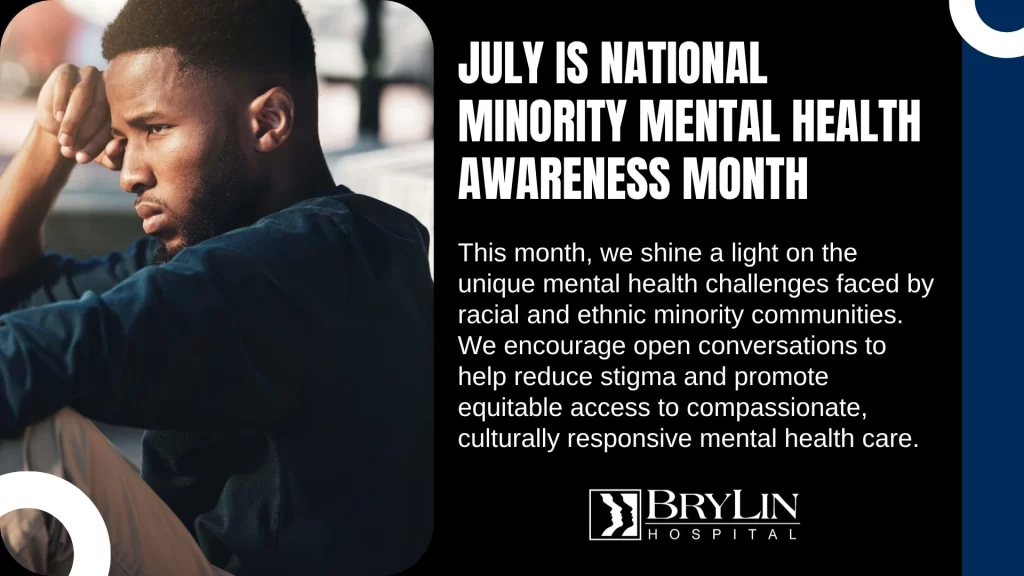
Breaking the Silence: Why Minority Mental Health Awareness Matters
Minority Mental Health Awareness reminds us that mental health affects every community, regardless of race, ethnicity, culture, or background. However, many individuals from minority communities continue to face unique barriers that prevent them from seeking care. Because of stigma, financial concerns, language differences, or limited access to culturally responsive services, too many people struggle in silence. Most importantly, help is available, recovery is possible, and no one should have to face a mental health crisis alone.
Each July, National Minority Mental Health Awareness Month honors the legacy of mental health advocate Bebe Moore Campbell. Therefore, this month serves as an opportunity to raise awareness, reduce stigma, and encourage individuals and families to seek support when they need it most.
Mental Illness Affects Every Community
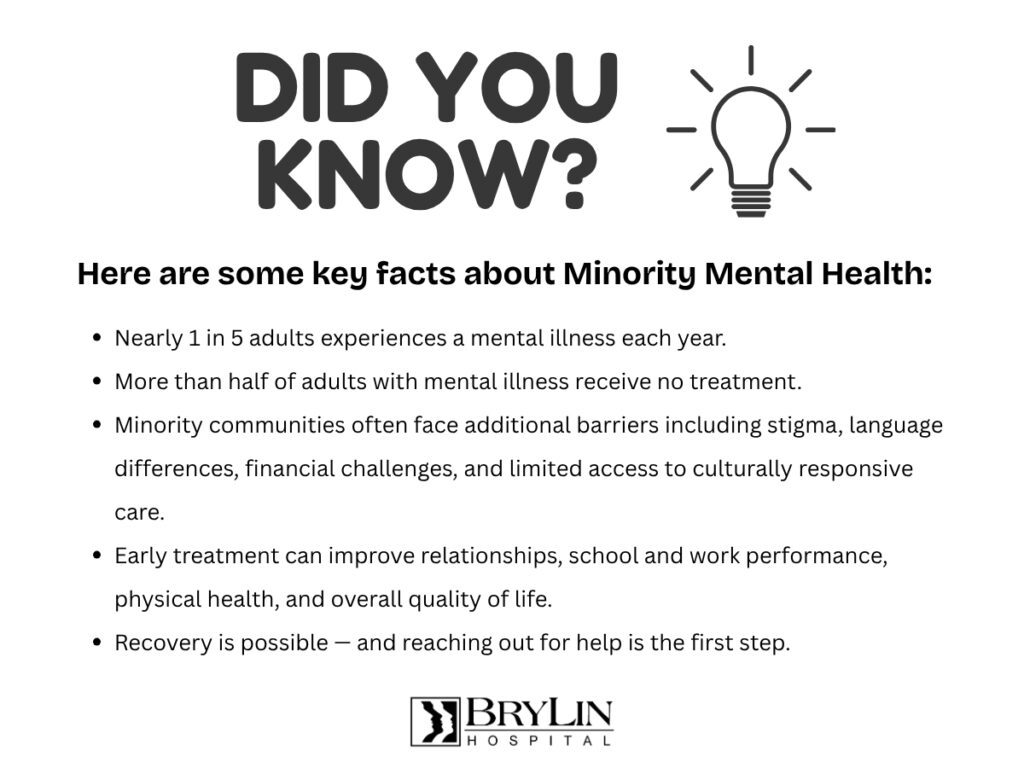
Mental health conditions are common. According to the Substance Abuse and Mental Health Services Administration (SAMHSA), nearly 1 in 5 U.S. adults experiences a mental illness each year. Yet, despite how common these conditions are, many people never receive treatment.
Unfortunately, more than half of adults living with a mental illness receive no treatment during a given year. Furthermore, treatment rates are often even lower among racial and ethnic minority populations. As a result, many people continue to struggle without the support they deserve.
Mental health conditions such as depression, anxiety, bipolar disorder, post-traumatic stress disorder (PTSD), and schizophrenia are medical conditions — not personal failures. Therefore, seeking professional care is a sign of strength, not weakness.
Understanding the Barriers to Care
Although mental illness does not discriminate, access to care is not always equal. Many individuals encounter obstacles before they ever speak with a mental health professional.
Common barriers include:
- Fear of being judged or misunderstood
- Cultural stigma surrounding mental illness
- Language and communication challenges
- Financial or insurance concerns
- Transportation difficulties
- Limited access to culturally responsive behavioral health providers
- Past experiences that have reduced trust in the healthcare system
Because of these barriers, many people delay treatment until their symptoms become overwhelming. However, early intervention often leads to better outcomes.
When Mental Health Goes Untreated
Untreated mental health conditions can affect every aspect of daily life. Relationships may suffer. Work or school performance may decline. Physical health can worsen. In addition, some individuals turn to alcohol or drugs in an attempt to cope with emotional pain.
Most importantly, untreated mental illness can increase the risk of suicide or other mental health emergencies. Therefore, recognizing the warning signs and seeking help early can make a life-changing difference.
Suicide Prevention Is Everyone’s Responsibility
Recent research has shown concerning increases in suicide rates among several minority populations, including Black youth, Hispanic adolescents, American Indian and Alaska Native communities, and LGBTQ+ youth of color. Although these trends are concerning, they also remind us why education and access to care matter.
If someone expresses feelings of hopelessness, withdraws from loved ones, experiences dramatic mood changes, or talks about wanting to die, those warning signs should never be ignored. Instead, encourage them to speak with a trusted family member, healthcare provider, or mental health professional immediately.
Treatment Works — And Recovery Is Possible
One of the biggest misconceptions about mental illness is that people must simply “learn to live with it.” Fortunately, that is not true.
Evidence consistently shows that treatment works. Therapy, medication when appropriate, crisis stabilization, family support, peer support, and community resources help millions of people recover each year.
Recovery does not always happen overnight. However, every conversation, every appointment, and every step toward treatment can move someone closer to hope and healing.
You Don’t Have to Wait for an Emergency
Many people believe they must go to an emergency department before they can receive psychiatric care. However, that is not always the case.
At BryLin Hospital, voluntary individuals experiencing a mental health crisis may often begin the admissions process through a confidential telephone screening before admission. Therefore, appropriate patients may be able to receive timely care without spending extended hours waiting in an emergency department.
Early intervention can reduce suffering, improve recovery, and connect individuals with the support they need before a crisis becomes even more severe.
Breaking the Silence Starts With One Conversation
Minority Mental Health Awareness is about more than recognizing disparities. It is about creating hope, building trust, and reminding every person that they deserve compassionate care.
Because mental illness can affect anyone, every conversation about mental health helps reduce stigma. Likewise, every person who reaches out for help encourages others to do the same. Together, we can build stronger, healthier communities where seeking treatment is viewed as an act of courage.
How BryLin Hospital Can Help
For more than 70 years, BryLin Hospital has provided compassionate behavioral healthcare for children, adolescents, and adults experiencing mental health crises. Our experienced multidisciplinary team offers individualized treatment designed to promote safety, stabilization, hope, and recovery.
If you or someone you love is struggling with depression, anxiety, thoughts of suicide, or another mental health concern, please know that you are not alone. Most importantly, help is available, and recovery is possible.
With Help, There’s Hope.
Helpful Resources
- Learn more about BryLin Hospital: https://www.brylin.com
- Behavioral health information from SAMHSA: https://www.samhsa.gov
- National Alliance on Mental Illness (NAMI): https://www.nami.org
- 988 Suicide & Crisis Lifeline: https://988lifeline.org

Comments are closed