
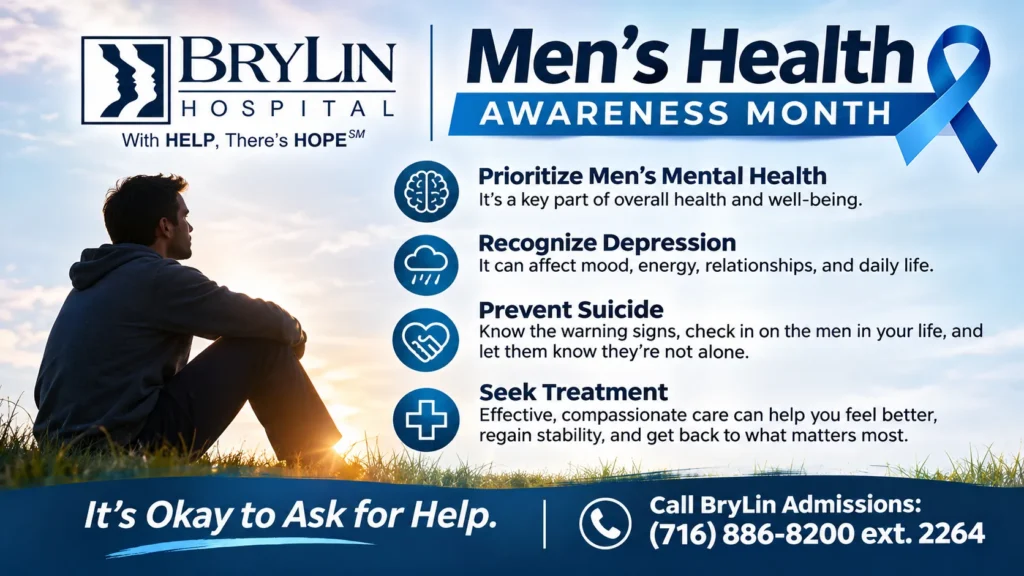
Men’s Mental Health Awareness Month: Breaking the Silence and Finding Hope
November is Men’s Health Awareness Month, also known as Movember. While many people associate this month with cancer awareness, men’s mental health awareness is equally important. Emotional well-being deserves the same attention as physical health. Yet many men feel pressure to stay strong, hide their feelings, and handle life’s challenges alone.
However, depression, anxiety, and other mental health conditions can affect anyone. Asking for help is not a weakness. Instead, it is an important step toward healing. At BryLin Hospital in Buffalo, NY, we provide compassionate care for people facing serious mental health challenges. Our services include short-term inpatient psychiatric stabilization and specialized electroconvulsive therapy (ECT).
Why Men’s Mental Health Awareness Matters
Men may face unique challenges when discussing mental health. Cultural expectations sometimes encourage them to remain independent or avoid emotional conversations. As a result, some men delay seeking care until their symptoms become severe.
In the United States, men account for nearly four out of five suicide deaths, according to the Centers for Disease Control and Prevention. This statistic shows why early support and access to treatment matter. Still, suicide is preventable, and many mental health conditions respond to treatment.
Most importantly, no one should feel ashamed of seeking help. With the right support, men can manage symptoms, learn coping skills, and regain hope.
Recognizing Warning Signs of Mental Health Struggles in Men
Depression and emotional distress do not always look like sadness. In fact, some men show changes through anger, isolation, or shifts in daily habits. Common signs include:
- Ongoing sadness, hopelessness, or emptiness
- Increased anger, irritability, or frustration
- Loss of interest in hobbies or relationships
- Changes in sleep, appetite, or energy
- Trouble focusing or making decisions
- Increased alcohol or substance use
- Withdrawal from family and friends
- Feelings of worthlessness or being a burden
- Thoughts of self-harm, death, or suicide
Everyone has difficult days. However, symptoms that last or disrupt daily life deserve attention. Therefore, talk with a health care professional when you notice these changes in yourself or someone close to you. Early support may help prevent a more serious crisis.

Breaking the Stigma: Asking for Help Takes Strength
Some men hesitate to discuss their feelings because they fear judgment. Others believe they should solve every problem on their own. Yet mental illness is not a character flaw. Depression, anxiety, and other psychiatric conditions are health concerns that deserve proper care.
Just as someone would seek care for chest pain or an injury, men should feel able to seek help for emotional distress. Furthermore, friends and family can make a difference. Ask how someone is doing, listen without judgment, and encourage professional support when needed.
Sometimes, the most helpful message is simple: You do not have to face this alone. You can also explore Movember’s men’s mental health resources for conversation and support ideas.
When a Mental Health Crisis Requires More Support
Outpatient therapy and medication help many people. However, someone experiencing severe depression, suicidal thoughts, psychosis, or major difficulty functioning may need more intensive care. In those cases, a short inpatient hospital stay may be appropriate.
BryLin Hospital provides inpatient psychiatric crisis care for children, adolescents, and adults in Buffalo and across Western New York. Our team focuses on stabilizing the immediate crisis. Then we work with each patient to plan for ongoing recovery and appropriate follow-up services.
Compassionate Inpatient Psychiatric Care at BryLin
Our multidisciplinary team builds an individualized treatment plan around each patient’s needs. Depending on clinical needs, care may include:
- Psychiatric assessment and monitoring during hospitalization
- Medication management
- Individual and group therapy
- Therapeutic activities, including music and art therapy
- Coping-skills education and supportive programming
- Family involvement, when appropriate
- Discharge planning and outpatient care coordination
Additionally, BryLin offers direct admission screening for people who may need inpatient psychiatric care. When clinically appropriate, this process may help someone access treatment without first visiting an emergency department.
Please call before coming to the hospital. BryLin does not operate a psychiatric emergency room or offer walk-in emergency psychiatric evaluations. Our admissions team can discuss clinical appropriateness and insurance benefits.
ECT Treatment at BryLin Hospital: Another Path Toward Hope
For some men, severe depression continues despite medication and therapy. Fortunately, additional treatments exist. Electroconvulsive therapy (ECT) is an evidence-based medical treatment for certain serious psychiatric conditions. It may help when other approaches have not provided enough relief.
BryLin Hospital’s Center of Excellence in Electroconvulsive Therapy provides both inpatient and ambulatory ECT services for adults. It is the only ambulatory ECT center in Western New York.

What Is Electroconvulsive Therapy?
ECT takes place under general anesthesia in a controlled medical setting. A trained team delivers a carefully controlled electrical stimulus that produces a brief therapeutic seizure. This treatment can improve symptoms of certain severe mental health conditions.
ECT may be considered for severe depression, treatment-resistant depression, certain presentations of bipolar disorder, catatonia, and other selected psychiatric conditions. In addition, it may offer faster symptom improvement for some patients who need urgent treatment.
Although outdated portrayals have created fear, modern ECT uses anesthesia and close medical monitoring. Like other medical procedures, it carries risks. These can include confusion and memory-related side effects. Therefore, clinicians carefully review the benefits and risks with each patient before treatment.
Specialized ECT Care in Buffalo, NY
BryLin’s ECT program is led by Chief Medical Officer Sanjay Gupta, MD, with support from psychiatrists, anesthesiologists, nurses, and other trained staff. Our team works with referring providers to determine whether ECT is appropriate.
For some people, ECT offers meaningful improvement after other treatments have fallen short. However, results vary, and ongoing mental health care may still be necessary. If severe depression has not improved, ask your psychiatric provider whether an ECT evaluation makes sense.
ECT questions and referrals: Call (716) 886-8200, extension 2196. You can also read our ECT frequently asked questions.
Men’s Health Awareness Month: Book a Check-Up
Men’s mental health awareness should be part of a broader conversation about wellness. Physical and emotional health influence each other. For example, chronic pain, sleep problems, and ongoing stress can affect mood and energy.
This November, take a few practical steps to care for yourself:
- Schedule an annual physical. Discuss your health concerns and emotional well-being.
- Review routine bloodwork. Ask which tests are appropriate for your age and medical history.
- Update your family history. Include both physical and mental health conditions.
- Discuss recommended screenings. Ask about prostate cancer screening and other age-appropriate care.
- Talk about mental health. Mention stress, anxiety, depression, sleep, and substance use.
- Stay connected. Make time for trusted friends, family, and supportive relationships.
Most importantly, do not wait for a crisis to begin the conversation. A regular check-up can provide a chance to ask questions and make a plan.
Supporting the Men in Our Lives
Men’s Health Awareness Month is also a chance to build stronger communities. Fathers, husbands, brothers, sons, friends, and coworkers all benefit when conversations about mental health feel safe and normal.
Start by checking in with someone you care about. Then listen without rushing to fix every problem. If they seem overwhelmed, encourage them to speak with a qualified professional. Moreover, take any talk of suicide seriously and help the person reach immediate support.

With HELP, There’s HOPE
At BryLin Hospital, we understand that reaching out for psychiatric care can feel overwhelming. However, no one should have to manage a serious mental health crisis alone. Our compassionate team provides short-term inpatient psychiatric stabilization and specialized ECT services when a higher level of care is appropriate.
This November, make mental health a priority. Book that check-up, start that conversation, and encourage someone you love to seek support. Because caring for your mental health is part of caring for your whole self.
Inpatient Admissions: (716) 886-8200, ext. 2264
ECT Center of Excellence: (716) 886-8200, ext. 2196
Learn more: www.brylin.com
*In a suicidal or emotional crisis: Call or text 988 for free, confidential, 24/7 support. Call 911 if there is immediate danger.
With HELP, There’s HOPE.

Comments are closed